
“What has been will be again, what has been done will be done again; there is nothing new under the sun,” says the writer of Ecclesiastes, somewhat wearily (1:9). As an author I’ve felt a little of that same dejection—after all, who wants their books to be ‘nothing new under the sun’? Yet when I consider it more closely, I feel grateful for the authors who have gone before me, who have inspired me and expanded my imagination with their fantastical worlds, to the point where I now create worlds of my own. My books are unique, of course. Nobody …
The Races of Star Trek: Vulcans and Klingons
When Star Trek: The Original Series made its debut on NBC in 1966, it didn’t take long for aliens to make an appearance. Gene Roddenberry’s first attempt at a pilot, “The Cage,” featured telepathic beings that could concoct realistic hallucinations. (Although NBC rejected that pilot, footage from that episode was later incorporated into the two-part story arc, “The Menagerie.”). The first aired Star Trek episode, “The Man Trap,” centered around a shapeshifting alien that drew the salt out of unsuspecting victims. Fifty years, hundreds of TV episodes, and nearly a dozen movies later — to say nothing of the books …
What is Steampunk?
What is steampunk? I’ve been asked this question a lot lately since my latest novel, Tainted, released last month. To make it easy, I condensed the definition down to this: steampunk is a fusion of our history (usually Victorian or western) and science fiction/fantasy with advance technology that runs on steam. For example: London set in an alternate universe where magic exists. A western city with sophisticated technology that runs on steam. A Goth English setting with a character who hunts monsters with high-tech weapons. What I love about steampunk is the possibilities. Steampunk isn’t just science fiction or …
Mythological Creatures: Kitsune
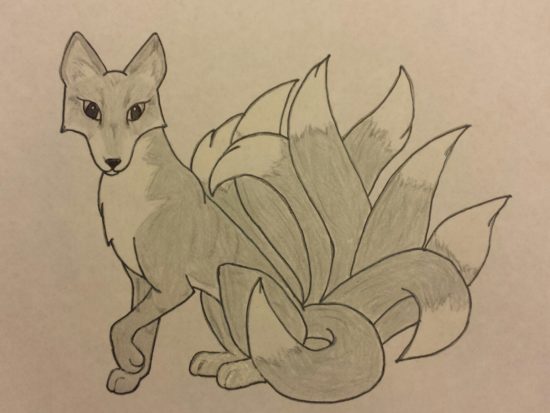
Today’s magical mythological creature is none other than the kitsune. Kitsune is the Japanese word for fox, so it’s not surprising that this mythological creature’s origins are in Japanese folklore. Most of the time, kitsune look like regular foxes, until they reach a hundred years old or so, then they start to grow more tails. They can have as many as nine, and the more tails a kitsune has, the older, wiser, and more powerful it is. They can be quite powerful. Among other things, kitsune can shapeshift into a human form—typically either as an old man or a young …
The Races of Star Wars: Wookiees and Ewoks
By Joshua A. Johnston When Star Wars first hit theaters in 1977, audiences were captivated by the exotic species of George Lucas’s galaxy far, far away. To the more casual filmgoer, the differences between the aliens of Star Wars and Gene Roddenberry’s then-decade-old Star Trek might have seemed little more than a difference in makeup budgets. The differences, though, went well beyond that. While Gene Roddenberry had political and cultural ideas in mind with his extraterrestrials, George Lucas had more entrepreneurial motives. Star Wars was about creatures that appealed to a broad age group … and, by the time of …
Mythological Creatures: Chimeras
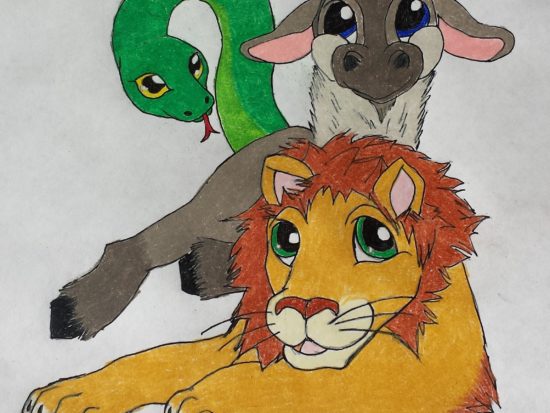
Magical creatures are some of my favorite things, probably because I love animals and creativity, and mythological beasts are the perfect blend of those two things. Speaking of blends, the animal I’ll be introducing you to today is the Chimera. Chimera is from Greek Mythology and is described as having the head and forelegs of a lion, the hind legs of a dragon or goat, and a snake for a tail. Chimera has three heads, the lion head, the snake head, and coming right up from the middle of Chimera’s back is the head of a goat. So sharp teeth …
Mythological Creatures: Orcs & Cyclopes
Which would you rather be: A one-eyed metalworker? Or cannibal? 😛 Today’s mythological creatures talk is on Cyclopes and Orcs. Enjoy. 😛 Cyclops In short, Cyclopes are moody giant-like creatures who have only one eye and are skilled mason-workers. Yeah, I didn’t know about the skilled mason-worker thing, either. Cyclopes tend to live in caves and the most famous cyclops was Polyphemus, who lived on an island. Cyclopes arise mostly from Greek mythology, but it’s also rumored that, because they were so great at the forges, the name arose from blacksmiths who used to wear an eyepatch over one eye to prevent getting …
Mythological Creatures: Satyrs & Fauns
Okay, which would you rather be…half goat, or half horse? No, not like cool-centaur-person. I’m talking satyrs and fauns. I think you’ll be surprised to learn these mythological creatures have been confused and mixed up a lot more than they ought to be. Satyrs Satyrs aren’t just half-goat-guys. Roman mythology is what paints them as half goat (legs, tail, horns and ears) but the more accurate myths (accurate myths…? Is that an oxymoron?) come from Greek mythology portrays them with a horse’s ears and tail. Satyrs are known to be pretty ugly and they’re girl-chasers. They’ll always fall for (and chase) anything with pretty …
Mythological Creatures: Giants & Gnomes
Ever been embarrassed by your height? (Or lack thereof?) Well, today on the mythological creatures channel, we’re going to make you feel a little shorter (or a little taller) by talking giants and gnomes. You thought you had it rough? Giants In short, if you didn’t know already, giants are humans of enormous strength and size. Giants pop up in sorts of cultures: Hindu, Native American, Greek, Roman, Norse, Bulgarian, Europe, etc. Giant folklore is thought to have originated from Greek mythology and, while they typically had the body of men, they also were said to have serpentine legs. Many …